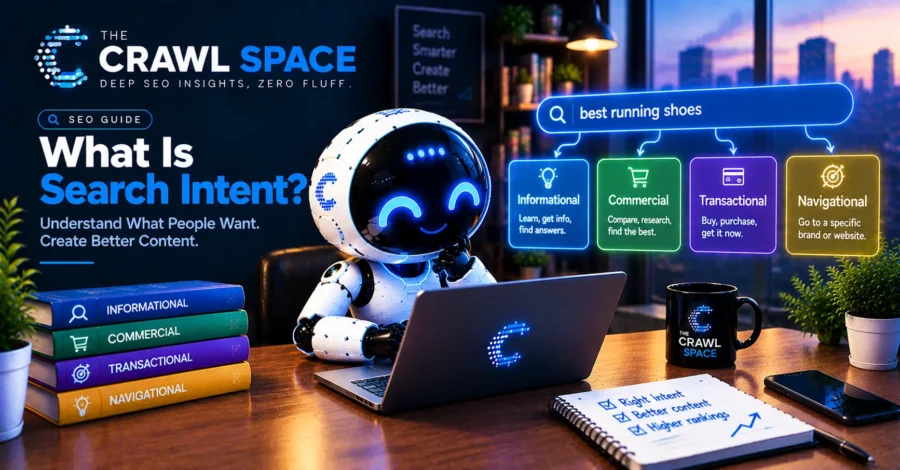
Search intent is the actual goal behind a search query — what the person typing it is trying to learn, find, compare, or do — and matching that goal matters more for ranking well than matching the literal words in the query. This guide is part of What Is SEO? and expands in full detail on the search intent concept only briefly introduced there.
Why the Goal Matters More Than the Words
Two searches can use almost the same words and still want completely different things. “Best coffee maker” from someone about to buy behaves differently than “coffee maker” from someone who just wants to understand what one is. Modern search engines are built to recognize this difference and match results to the underlying goal, not just the term itself — which is why a technically well-written page can still fail to rank if it answers a different version of the question than the one actually being asked. Understanding intent isn’t a nice-to-have layered on top of keyword research; it’s the thing keyword research is ultimately trying to uncover.
The Four Core Types of Search Intent
Informational intent means the searcher wants to learn something — a fact, an explanation, or a set of instructions — with no immediate plan to buy or navigate anywhere specific. Examples: “how to fix a leaky faucet,” “what is SEO,” “why is the sky blue.” Content that satisfies this intent explains things clearly, often with a direct answer near the top followed by supporting detail.
Navigational intent means the searcher already knows where they want to go and is using a search engine to get there faster, rather than typing a URL directly. Examples: “YouTube login,” “Semrush dashboard,” “Nike official website.” A brand’s own official pages, login portals, and support pages are what this intent is looking for — competing content rarely has a chance here, since the searcher isn’t evaluating options at all.
Commercial investigation intent means the searcher is actively comparing options before deciding, but hasn’t committed to a purchase yet. Examples: “best running shoes for wide feet,” “iPhone vs Samsung comparison,” “Semrush vs Ahrefs.” This intent is well served by comparison articles, in-depth reviews, and “best of” roundups that genuinely help someone choose rather than push one option.
Transactional intent means the searcher is ready to act — buy, sign up, book, or download — right now. Examples: “buy Nike Air Force 1 size 10,” “book flight to Paris,” “download Photoshop free trial.” Product pages, pricing pages, and clear calls to action are what this intent needs; a long educational article gets in the way of someone who’s already decided.
Two Newer Intent Types Worth Knowing
Beyond the traditional four, two additional categories have become distinct enough in recent years to name separately.
Local intent carries a geographic component, either stated directly (“plumber in Austin”) or implied by context (“pizza near me”). It typically triggers map-based results and local business listings rather than standard organic content, and it overlaps with, but isn’t identical to, the four core types above — a local search can still be informational, commercial, or transactional underneath its geographic layer.
Generative intent is newer still, and specifically describes queries directed at an AI system to produce something, rather than to find an existing page — “write a 30-day social media plan for a dental clinic,” “compare these two tools and recommend one for a small business,” “generate a workout routine for beginners.” One industry analysis found this type of query already makes up a substantial share of activity within AI chat tools specifically, though the exact proportion varies by platform and hasn’t been independently verified across sources. This intent type doesn’t map cleanly onto traditional search results at all — it’s a different kind of interaction entirely, and it’s part of what’s driving the broader shift toward AI-focused optimization.
Most Real Searches Blend More Than One Intent
Treating every query as a clean match to exactly one category oversimplifies real search behavior. A search like “AI SEO tool” might carry commercial intent (comparing options) and navigational intent (looking for a specific known product) at the same time, depending on what the searcher already knows. Recognizing that a query can carry a primary intent alongside a secondary one is often more accurate than forcing every search into a single box.
How to Actually Tell What a Query’s Intent Is
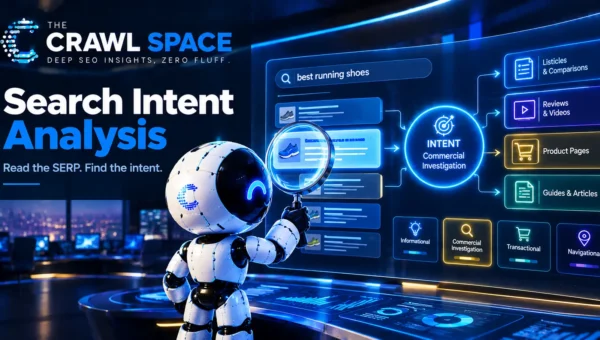
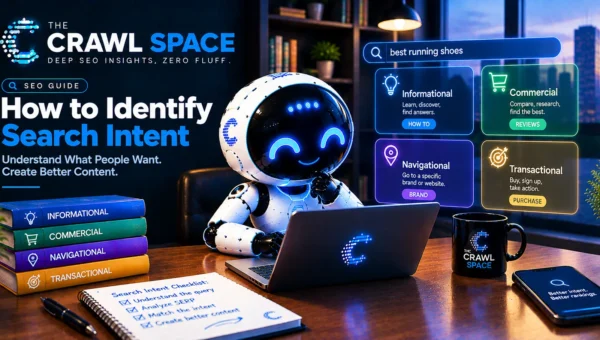
The most reliable method is looking at what’s already ranking for that exact query — content type, format, and angle all reveal the intent Google has already determined it to be. A search returning mostly listicles and comparison pieces signals commercial intent; a search returning long-form guides and explainer content signals informational intent. SERP features are a signal too: a featured snippet typically indicates informational intent, since Google is providing a direct answer rather than sending the searcher to compare options.
→ Full guide: How to Identify Search Intent
→ For more on how SERP features reflect intent: What Is a SERP?
Search Intent and Content Strategy
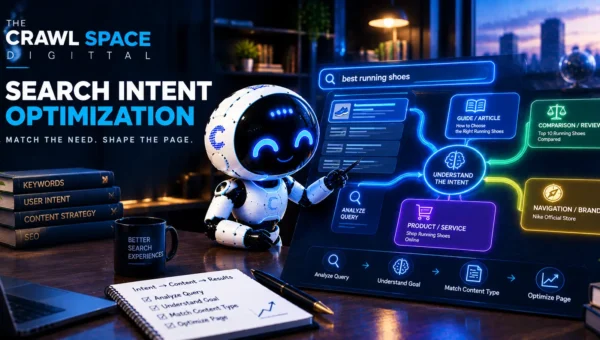
Once intent is identified, it should shape the content format itself, not just the topic. Writing an in-depth educational guide for a transactional query fights the very intent it’s trying to satisfy, the same way a bare product page fails someone who’s still in the comparison stage. Matching format to intent — not just covering the right subject — is what separates content that ranks from content that merely exists.
→ Full guide: Search Intent Optimization
→ Full guide: Search Intent Analysis
→ Full guide covering every intent type in more depth: Types of Search Intent
Common Mistakes
- Matching keywords without checking intent, producing content that’s topically correct but structurally wrong for what the searcher actually wants
- Treating every query as having exactly one intent, missing that many real searches blend a primary and secondary goal
- Building informational content for transactional queries (or vice versa), fighting the very intent the content is trying to satisfy
- Assuming intent from the words alone instead of checking what’s actually ranking for the term
Frequently Asked Questions
Can a single page satisfy more than one search intent?
Occasionally, for genuinely mixed-intent queries, but forcing one page to serve conflicting intents (a deep educational guide and a hard sales pitch, for instance) usually serves neither well. It’s often better to build separate pages for clearly distinct intents.
How is search intent different from a keyword?
A keyword is the literal phrase someone types; intent is the goal behind it. The same or similar-looking keywords can carry entirely different intents, which is why intent — not the keyword itself — should drive content decisions.
Does search intent apply to AI search the same way it does traditional search?
The core informational, navigational, commercial, and transactional categories still apply, but generative intent specifically — queries directed at an AI system to produce something — doesn’t map onto traditional search results at all, and represents a genuinely distinct category of searcher goal.
The Bottom Line
Search intent is the actual goal behind a query, and matching it — not just matching the words — is what determines whether content actually satisfies a search. The four core intent types (informational, navigational, commercial, transactional) cover most traditional search behavior, two newer categories (local and generative) have become distinct enough to name separately, and real queries frequently blend more than one intent at once. Everything else in this guide builds on getting this identification right first.