A SERP (search engine results page) is the page a search engine returns after someone runs a query — the actual page of results, not just the ranked list of links people often picture when they think of “search results.” This article is part of the What Is SEO? guide and covers what’s actually on that page today, which looks very different than it did even a few years ago.
What’s Actually On a Modern SERP
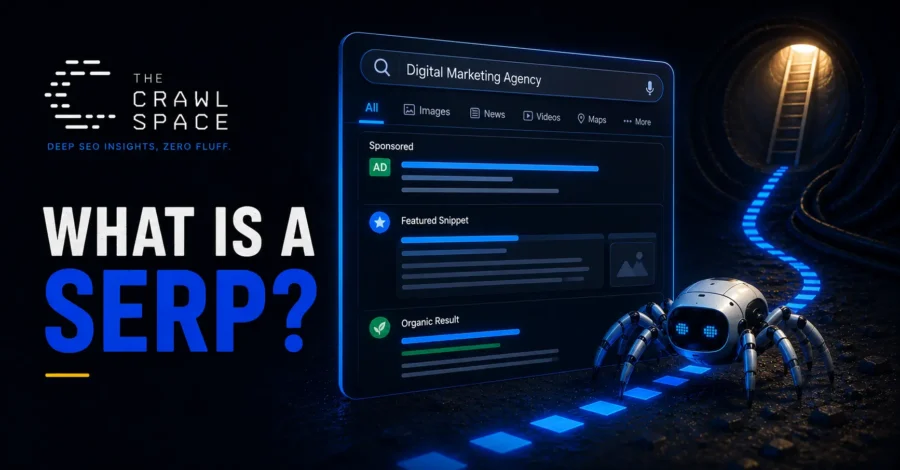
A SERP is built from three broad categories of content:
- Organic results — the unpaid, algorithm-ranked listings. Covered in depth in What Is Organic Search?
- Paid results — ads businesses bid on, labeled “Sponsored”
- SERP features — everything else Google inserts to answer a query more directly, without requiring a click
That third category is the part that’s changed the most. A search today can surface an AI-generated summary, a featured snippet, a knowledge panel, a map with local business listings, a video carousel, and a “People Also Ask” box — often filling most of the visible page before a single traditional blue link appears.
Common SERP Features
| Feature | What It Does |
|---|---|
| AI Overview / AI Mode | An AI-generated summary answering the query directly, often citing multiple sources |
| Featured snippet | A pulled excerpt from a page, shown in a highlighted box above the regular results |
| People Also Ask | An expandable box of related questions, each revealing a short answer when clicked |
| Knowledge panel | A summary box about a specific entity — a person, place, or organization — pulled from structured data sources |
| Local pack | A map with a short list of nearby businesses, shown for location-relevant searches |
| Image and video carousels | Horizontally scrollable visual results for queries with strong visual intent |
| Shopping results | Product listings with images and prices, shown for commercial queries |
| Top stories | A carousel of recent news coverage for timely topics |
Not every SERP includes every feature — which ones appear depends entirely on the query and its intent. A definitional search like “what is compound interest” tends to trigger a direct answer box; a local search like “plumber near me” tends to trigger a map and local pack; a product search tends to trigger shopping results.
Why the Same Search Can Look Different for Different People
SERPs aren’t identical for everyone who types the same query. Location shifts local results and local pack visibility. Device changes layout and which features appear at all — mobile and desktop SERPs aren’t always structured the same way. Search history and account settings can influence which results feel most relevant to a specific person. This is part of why two people comparing “my ranking” for the same term can genuinely see different pages, and it’s a common source of confusion for anyone new to checking their own search performance.
Ranking Position Isn’t the Whole Story Anymore
For years, SEO success was measured almost entirely by organic ranking position — did a page land in position one, three, or ten. SERP features complicate that. A page can rank first organically and still sit below an AI Overview, a featured snippet, ads, and a local pack, all competing for the same limited above-the-fold space. This has pushed some SEO measurement toward a broader idea sometimes called share of SERP — how much total visible space a brand occupies across all the features on a results page, not just its blue-link position.
This doesn’t make organic ranking irrelevant — it’s still usually the foundation other features draw from — but it does mean a page can be “ranking well” in the traditional sense while still losing most of the actual clicks to features stacked above it.
Why SERPs Matter for SEO
Every SERP feature represents a different opportunity — and a different piece of competition. A featured snippet can be won with clearly structured, direct-answer content, independent of overall ranking position. A knowledge panel typically depends on structured data and an established entity presence rather than page content alone. Understanding which features actually appear for a given search — before writing anything — is part of the search-intent research that shapes good content, since building a page aimed at a traditional ranking spot is a different task than building one aimed at winning a featured snippet.
Frequently Asked Questions
Does every search engine’s results page work the same way?
The general concept — organic results, paid results, and enhanced features — is shared across major search engines, but the specific features, their names, and how frequently they appear vary by engine.
Can a business appear in more than one SERP feature at once?
Yes. A single business can show up in organic results, a local pack, and a knowledge panel for the same search, which is part of what “share of SERP” tries to capture.
Is checking your SERP the same as checking your search ranking?
Not quite. A ranking check usually reports a single position number; actually looking at the SERP shows the full context — everything competing for attention above and around that position.
The Bottom Line
A SERP is the full page a search engine returns for a query — organic results, paid ads, and an increasingly large set of features layered on top of both. Understanding its actual anatomy, not just an assumed list of ten blue links, is what makes it possible to set realistic expectations for what ranking well actually delivers in traffic.