SEO (search engine optimization) is the practice of improving a website so search engines like Google can find it, understand it, and show it to people searching for related information — without paying for that placement. This guide covers what SEO is, how it actually works, and every major subtopic within it, with links to a full guide on each.
The Simplest Way to Understand SEO
Picture two bakeries opening on the same day. One sets up on the busiest street downtown, with a clear sign visible from the sidewalk. The other opens in a warehouse three blocks off the main road, with no sign at all. Both might make equally good bread. Only one of them gets walked into.
A website works the same way. Google is the street everyone walks down — billions of times a day. SEO is everything you do to make sure your site has a visible storefront on that street instead of sitting unmarked in the warehouse: making it findable, making it clear what you offer, and making it trustworthy enough that Google wants to send people your way.
How Search Engines Actually Decide What to Show
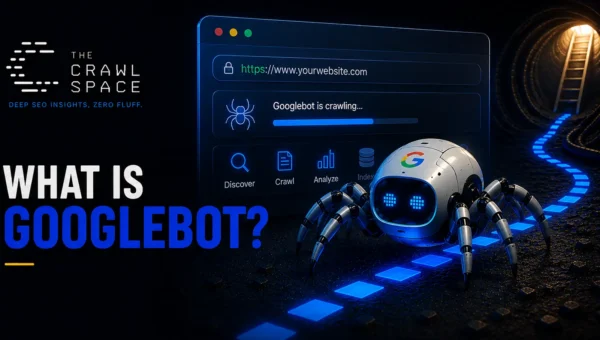
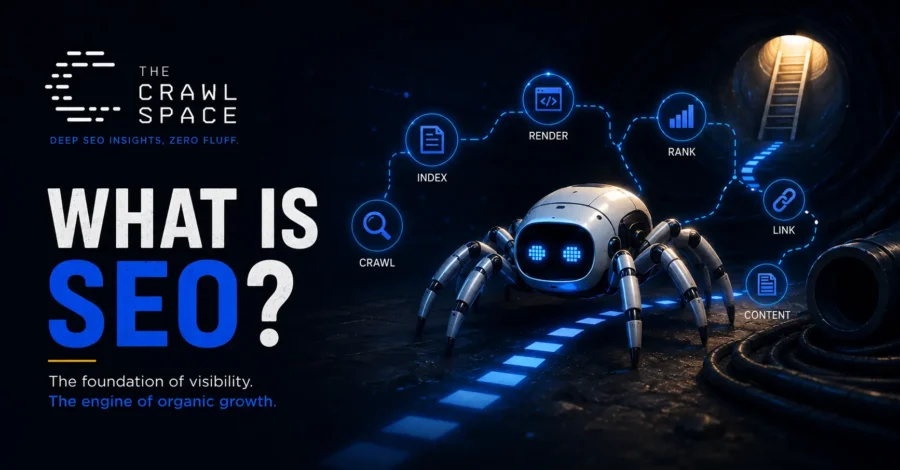
Search engines find, catalog, and rank pages through three ongoing processes: crawling, indexing, and ranking. Automated programs called crawlers (Google’s is Googlebot) follow links from page to page, discovering content as it’s published or updated. What they find gets analyzed and stored in a massive database — the index. When someone searches, Google’s ranking systems pull relevant pages from that index and order them using hundreds of signals: relevance to the query, trustworthiness of the source, and quality of experience, among others.
SEO touches all three stages, not just “writing good content.” A page that can’t be crawled can’t be indexed. A page that isn’t indexed can’t rank. And an indexed page still won’t rank well if it doesn’t hold up against everything else competing for that search.
→ Full guide: How Do Search Engines Work? The Technology Behind Every Search
The Three Core Pillars of SEO
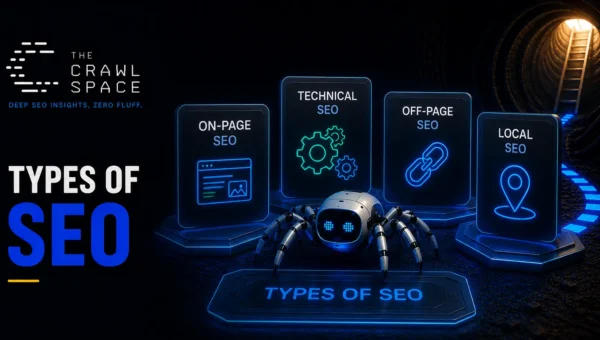
SEO work is organized into three connected categories: on-page, technical, and off-page. Weakness in any one limits what the other two can achieve.
| Pillar | What It Covers | Typical Work |
|---|---|---|
| On-page SEO | Content and HTML elements you control directly on a page | Search intent matching, content, title tags, headings, internal links, image alt text |
| Technical SEO | Whether search engines can crawl, render, and index the site efficiently | Site speed, mobile usability, crawlability, sitemaps, structured data |
| Off-page SEO | Signals that build authority and trust from outside your own site | Backlinks, brand mentions, digital PR, reviews |
On-Page SEO
On-page SEO is everything you write and structure directly on a page to help it match what someone is searching for. It starts with understanding what the searcher wants and making sure the page actually delivers that.
Core elements: title tags and meta descriptions, heading structure (H1/H2/H3), thoroughly written body content, internal links to related pages, and descriptive image alt text.
Technical SEO
Technical SEO makes sure nothing blocks a search engine from accessing, rendering, and understanding your site. It’s invisible to visitors when done right, and very visible in ranking performance when it isn’t.
Key areas: crawlability and indexability, site speed and Core Web Vitals (Largest Contentful Paint under 2.5 seconds, Interaction to Next Paint under 200 milliseconds, Cumulative Layout Shift under 0.1 — all measured against real visitor sessions), mobile usability, structured data (schema markup), and sitemaps.
Off-Page SEO
Off-page SEO covers the signals that build a site’s reputation from outside its own pages — most importantly, backlinks. When another website links to yours, it acts as a kind of endorsement. Search engines weigh both the quantity and, more heavily, the relevance and trustworthiness of the sites linking to you.
Off-page authority is the slowest pillar to build honestly, and the easiest to damage through shortcuts — buying links or joining link exchange schemes violates search engine guidelines and can trigger penalties.
The Different Types of SEO
Beyond the three core pillars, SEO branches into specialized disciplines depending on what kind of site or business you’re running. A local service business, an online store, and a global SaaS company each lean on a different mix of these.
→ Full guide, covering every type by business model, content format, and platform: Types of SEO
- Local SEO — visibility for location-based searches (“plumber near me”). Centers on your Google Business Profile, consistent name/address/phone info across directories, and local reviews.
- E-commerce SEO — optimizing product and category pages at scale, handling duplicate content from filters and variants, and using review schema to earn star ratings in search results.
- International SEO — targeting multiple countries or languages correctly, primarily through hreflang tags so the right regional version of a page shows to the right audience.
- Voice SEO — optimizing for conversational, question-based queries spoken into voice assistants rather than typed.
- Video and YouTube SEO — optimizing titles, descriptions, and transcripts so video content is findable both on YouTube and in regular search results.
A site rarely needs all of these at once. An e-commerce store needs technical, on-page, and e-commerce SEO from day one; international and voice SEO can typically wait until the core disciplines are solid.
Search Intent: The Question Behind the Question
Search intent is what a person actually wants when they type a query, and matching it matters more than matching the exact keyword. Searches generally fall into four categories: informational (learning something), navigational (looking for a specific site), commercial investigation (comparing options), and transactional (ready to act). Search engines match the type and depth of result to that intent — a product page rarely outranks a comparison guide for someone still deciding, and vice versa for someone ready to buy.
Keyword Research: Finding What People Actually Search
Keyword research is the process of identifying the actual words and phrases people type into search engines when looking for something related to your content, then evaluating which ones are worth targeting. It’s the step that grounds everything else in this guide — content built around guessed phrasing, rather than researched phrasing, tends to miss the audience entirely.
The basic process: start with a broad topic, expand it into related terms and questions (often using a keyword research tool), then evaluate each term by search volume (how often it’s searched), difficulty (how hard it is to rank for), and — most importantly — intent match (whether the term actually fits what your page offers). A term with high volume but the wrong intent produces traffic that doesn’t convert; a term with modest volume but a precise intent match often performs better in practice.
E-E-A-T: How Google Assesses Content Quality
E-E-A-T stands for Experience, Expertise, Authoritativeness, and Trust — the qualities Google’s systems are trained to reward in content. Experience asks whether the creator has actually used or done the thing they’re writing about. Expertise asks whether the content demonstrates real, accurate knowledge. Authoritativeness asks whether the site or author is recognized as credible on the topic. Trustworthiness asks whether the information is accurate, transparent, and free of manipulative intent.
E-E-A-T isn’t a single score Google calculates — it describes qualities that Google’s ranking systems and human quality raters are trained to look for, and they happen to be the same qualities that make content genuinely useful to a reader.
SEO vs. SEM: Two Related but Different Things
SEO earns visibility in unpaid, organic search results; SEM (search engine marketing) is the broader category that includes SEO plus paid search advertising, like Google Ads. The “Sponsored” listings at the top of a results page are the paid side of SEM. The regular listings below are what SEO influences. SEO is a longer-term investment in earned visibility; paid search is immediate but stops the moment you stop paying for it.
→ Full guide: What Is Organic Search? Organic vs. Paid, Explained
How AI Search Is Changing SEO
AI-generated overviews now answer a large share of searches directly on the results page, which has pushed SEO into two related new disciplines: AEO (Answer Engine Optimization) and GEO (Generative Engine Optimization). AEO structures content so it can be extracted cleanly into a short, standalone answer. GEO focuses on making content clear and well-sourced enough that AI systems choose to cite it.
Ranking well in the traditional sense doesn’t guarantee an AI citation — one industry study found AI Overviews pulled from the current top 10 Google results only about two-thirds of the time, with even less overlap against other AI chat tools. Still, sites that already rank in the top 10 are meaningfully more likely to get cited by AI than sites that don’t, so traditional SEO fundamentals remain the foundation rather than a separate track of work.
SEO Tools and Measurement
SEO work is measured through a mix of free platforms and third-party tools that track rankings, traffic, and technical health. Google Search Console shows how your site performs in actual Google search results — which queries bring visitors, which pages are indexed, and what technical errors need fixing. Google Analytics (currently GA4) tracks what happens after someone lands on your site — pages viewed, time spent, and conversions. Beyond Google’s own tools, third-party platforms handle competitive research and keyword tracking at a scale Search Console doesn’t cover.
The core metrics worth tracking: organic traffic (visitors arriving from unpaid search), keyword rankings (position for target terms), click-through rate (how often a listing gets clicked when shown), and conversions (whether that traffic actually accomplishes something — a sale, a signup, a lead).
How SEO Got Here: A Short History
SEO in its current form looks very different from its early-2000s version, largely because Google’s algorithm updates have repeatedly rewarded quality and penalized manipulation. Early SEO was dominated by keyword stuffing and low-quality link schemes. Google’s Panda update (2011) targeted low-quality, thin content. Penguin (2012) penalized manipulative link-building. Hummingbird (2013) improved Google’s ability to understand the meaning behind a search rather than just matching keywords. Since then, mobile-first indexing, machine learning models like RankBrain, and increasingly sophisticated language understanding have continued to shift SEO away from technical tricks and toward genuinely useful, well-structured content — which is also why the same fundamentals now carry over into AI search.
Common SEO Mistakes Beginners Make
- Writing for algorithms instead of readers — unnatural keyword repetition reads poorly and can hurt rankings.
- Ignoring technical basics — a slow or mobile-unfriendly page undercuts even excellent content.
- Targeting the wrong keywords — a term with no real search volume, or a poor intent match, produces little useful traffic.
- Publishing shallow content — a page that skims a topic rarely competes against real depth on the same ground.
- Buying links or joining link schemes — breaks search engine guidelines directly and risks a penalty.
- Not measuring anything — publishing without tracking performance makes it impossible to know what’s working.
Getting Started: A Reasonable First Sequence
- Confirm the technical foundation — crawlable, mobile-friendly, reasonably fast.
- Research what your audience actually searches for, and the intent behind it.
- Build content that thoroughly satisfies that intent.
- Earn authority through links and mentions.
- Measure and refine using Search Console and your analytics platform.
→ Full guide: SEO Strategy: How to Plan and Prioritize SEO Work That Works
Frequently Asked Questions
Is SEO still worth doing with AI search on the rise?
Yes. Traditional organic listings still appear alongside AI-generated overviews for most searches, and the practices that earn AI citation overlap heavily with the practices that earn strong traditional rankings.
How long does SEO take to show results?
It varies by competition level, site history, and scope of work, with no universal timeline. Newer sites or highly competitive topics generally take longer than established sites making targeted improvements.
Do I need to hire an SEO agency, or can I do it myself?
Basic on-page and content fundamentals are approachable for a beginner. Technical SEO at scale, competitive link building, and complex site architecture typically benefit from specialized expertise on larger sites.
What’s the difference between SEO and SEM?
SEO earns unpaid visibility in organic results. SEM is the broader category including both SEO and paid search advertising.
Do I need to do every type of SEO listed here?
No. Which types matter depends on your business — a local service business prioritizes local SEO, an online store prioritizes e-commerce SEO, and most sites can skip international or voice SEO entirely until the core fundamentals are solid.
The Bottom Line
SEO isn’t a single tactic or a one-time setup. It’s an ongoing practice built on three pillars — on-page, technical, and off-page — with specialized disciplines layered on top depending on the business, grounded in matching content to what people actually want to know, and increasingly shaped by how AI systems interpret and surface information. What’s stayed consistent through every algorithm update and platform shift is the underlying goal: build something genuinely useful, make sure it’s easy to find and understand, and earn the kind of trust that keeps it visible over time.